Reflections

Recognition

Mom guilt. Woman guilt. Friend guilt. Family guilt. It doesn’t all fit—it never, ever will. All we can do is set priorities, decide which of our roles are most worthy of the space in our days. How much time did I spend playing with my son today? Never as much as I’d like to, ever.

So who gets the minutes I have leftover, once the work is done? There’s always another anybody I could do a real-quick everything for—or my boy and I could drive the dump truck across the carpet one more hour today than usual.

It’s the service projects outside the home that receive all the kudos and brownie points. That’s where I’ll find recognition and a name. I can prove to the world I’m still ablaze with missionary zeal and busyness; I can astound my peers with how much I manage to accomplish even with a baby on the hip; I can try to reassure my insecure ego that I’m definitely an important, self-sacrificing somebody making a difference everywhere but here.

Or I could hear my husband’s heart as he and I walk around the block every afternoon, then hold my baby’s hands as he walks around the furniture again. For all my education, abilities, and big ideas, the greatest accomplishment I can achieve each day is to walk in circles with the same two boys, listening and laughing, teaching and repeating, slow and satisfied enough to let my heart rest in the trophy of their simple presence.

No one will notice. No one will care. But the blessed path never was impressive. The good life is only good from the inside looking out. From the outside, it looks just like any other house, too boring and normal to count for much.

Reflections

Instead of Adventure

Recently I’ve been remembering my waterfall days, when I stood at the top of the yawning mouth of the world and looked down, and when I stood at the bottom of the rush and climbed up. I’ve been happy for family members whose feet are currently wet with adventure, and dreaming about which ships my son will choose to sail whenever the compass starts calling his name.

And these are all wonderful. But for a couple of years after the jungle slipped just past my grip, I struggled to hear the voice of God, and with time I learned to long more for the unexpected experiences in the Spirit than I did for the fun of a canoe. Walking with God is the adventure that soaks past the skin, that lasts past the letdown of the flight back home.

Jesus speaks, He breathes, He teaches and heals, He gives me exactly the Word I need every night I reach the end of my strength. He meets with me, corrects me when I’m wrong, softens my heart back from bitterness, and fills me with joy when I should just be stressed. I walk through hardship, yes, yet He holds me up and rescues me when the enemy attempts to take me out. Jesus speaks at the most surprising times, and every glimpse of Him makes me catch my breath. He never answers my prayers the way I wanted, but He always answers them well. I never know who He will send my way next, which divine conversation He will design as His purposes bring His people together.

I’m so thankful for every stream He’s let me cross—and I haven’t taken my water shoes off yet. Nothing is more exhilarating than living by the voice and the power and the Word of the Lord, and He is moving like a river, unpredictable and swift.

Reflections

Gently Disagree

“Cheer up, Sarah.”

I don’t speak up for myself as often as I should. Complaints practically have to rip themselves out of me; I will bear it and bear it and wear myself out, one scrap at a time, before I find the courage to admit out loud that something is wrong.

That’s a weakness, by the way, not a strength. In theory, I value direct communication over silence and resentment. But I struggle to vocalize my needs sometimes, especially when the person I know I need to talk to hasn’t had a history of hearing me well. Sooner or later, it’s easier to shut down and give up, to stop fighting so hard against the relentless current and just take it if you so obviously must.

And yet, deeper down, I can’t ever quite forget that I was born a freedom fighter, and it burns me bitterly to silence the truth. When everyone around me keeps their mouths shut against all the frustrations that they’ve shared with me in private, eventually I hit a point of breaking past my hesitations and not caring what people think anymore. I say it, for me and for them, even if no one else will. And once again, I’m the one who ends up looking grumpy when I know I’m just the only one who’s willing to say what half of everyone is thinking.

I’d like to pretend that my courage extends to not caring how other people respond afterwards. An invalidating, “Cheer up, Sarah,” tossed my way rolls right off my back like so much dust; I know who I am and I know what’s true, and I am above the opinions of mere mortals. But in the authorized autobiography, being reminded that my pain can be so easily dismissed, my image reduced to that of a petulant child by people who have no idea and do not care to ask what obstacles I’ve been up against for the last six months sends me to hide in a locked room by myself and cry like a kid. You can know you shouldn’t care—that you won’t care once you’re a few more miles down the road—and still have to cry it out of your system sometimes.

Because at the end of the day, I prefer to contribute to a culture that can handle tough conversations, where you don’t have to be happy and you’re allowed to disagree. I suffocate in groups that demand smiles and consensus, while I relax when I can tell that saying “no” and pushing back are a regular part of the rhythm of the room. So you don’t have to like it, but I’m going to stay honest, if only to keep my own integrity intact. I refuse to ever smother my own soul just to please those who value the appearance of pleasantries over the actual, tangible wellness of every individual involved. I’ve fought too hard out of too many coffins to roll over and play dead for anyone else’s shallow system.

Speak up, friend, when it’s important and you need to. I don’t mean you should cry over spilled milk; I’m not talking about immature tantrums or an imagined victim complex. Choose your battles, but then fight them well. Speak always with kindness and respect. Articulate what you mean clearly, and avoid raising your voice if you possibly can. But speak, you truth-teller, speak, always speak, and gently disagree with anyone who tells you that you haven’t yet earned your voice. No one can muzzle you, though many might try. Let yourself be shamed and called names, and check your conscience and your God to know you’re not missing the mark or calling it wrong, but then do your best and never let your needs be bulldozed by someone who knows better.

Live by the truth, no matter what it costs you.

Reflections

Gratitude

It is a truth universally acknowledged that crazy people are going to do crazy things—and the world will always have a surplus of them. They will pour insults like acid on your head; they will drag you in to their endless, self-inflicted drama. They will ask you for a thousand favors and give none. They will squeeze every last drop of pity out of your system and then tell their friends that you’re the vampire when you have nothing left to give to the permanent victim. And when that fails, they will simply switch to a new flavor of crazy. And when you move on from them, they will wait a few months and then chase you down again—or they’ll be gone just as a new one works its way out of new shadows.

The whole world thrums with constant crazy, and you can stew on that injustice as long as you’d like. I spent most of my afternoon simmering with it, and the anger didn’t fix a darn thing. But then I remembered what a man said this morning at church about gratitude, and the equation shifted.

Sure, there’s a time and place to let yourself sit in the anger and sadness and hurt of it all. I don’t mean to deny that. These are complicated puzzles built with complicated clues, and each one takes a good bit of handling to know how to solve. It’s just that at the same time, there’s also this: I have a life I absolutely love.

I crack at least fifty jokes a day and greet 200-some-odd students in the hall. I wear clothes I like, with bright colors and slim fits. My husband is the most interesting person I’ve ever met, and I get to spend hours hanging out with him every day. I go to a church with an epicenter of love and truth. My friends genuinely care about me. My little invisible belly baby is bigger today than the day before. I have food in the kitchen and a smart, smart man who thinks to the future and provides well for us. I have learned to resist workaholism by simply saying “no” instead of slaving away every day after hours, which means that now at the end of the day I come home and rest.

“He fills my life with good things.” Psalm 103:5

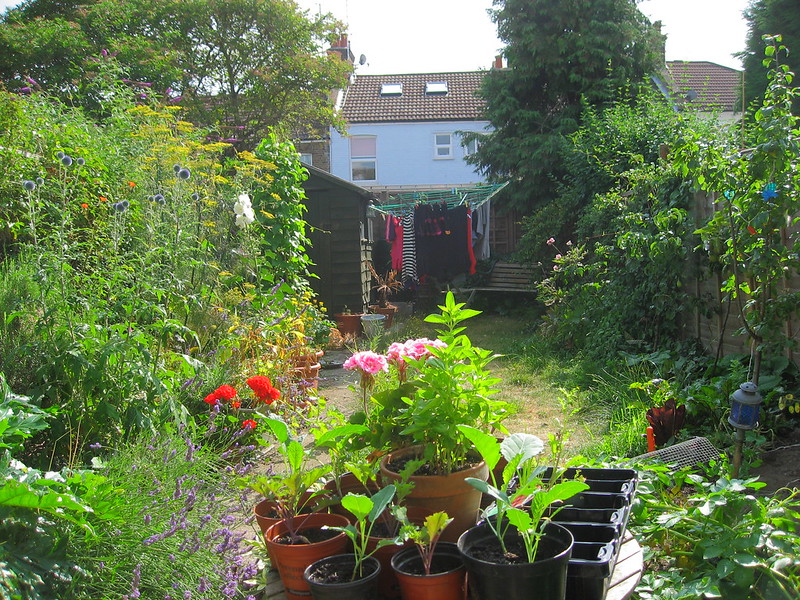
Some days, for a handful of minutes at a time, I have to think through a way to wisely respond to crazy people who try to chip away at the person I am and the joy that I carry. Those minutes will most likely always drive me halfway crazy, too—but the trick is that after they’re over, I don’t have to stay there. I have the rest of the day to drink up my beautiful life, the life that I’m building and not the chaos that consumes the crazies. I can give in and let them dictate my emotions for hours on end—or I can close the gate behind me and cultivate my garden, grow flowers and herbs and adventures and art.

My life will be full, and I will fix my gaze on its blessings and zest.

Reflections

Who saves?

Teachers change lives.

Today, a former student of mine sits alone behind bars and a handful of charges that won’t go away. It isn’t capitalization or The Odyssey that whirs through his mind this afternoon. He doesn’t fill out a Venn diagram comparing and contrasting himself with Romeo (same: they have both now killed a man in a moment of desperation—different: he did it for meth, not for friendship). Perhaps, you’ll say, somewhere in the fuzzy back of his brain, he catches glimpses now and then of the themes we tried to untangle together in the depths of tenth grade—the centrality of love, what to do when you’re depressed, why faithfulness matters, why you matter no matter what. But my money isn’t on it. The lessons are gone, flushed down the drain of his life before. Every hour I spent haggling him to keep reading with us, we’re on page 197you still need three more sentenceswhat are your long-term goals? can you write about that?pay attention—no horseplay in class—your grade is falling; you need to catch up—is an investment soured and spent.

You could step in and encourage me here: “You never know, Sarah. He might remember those things still. You made an impact! Something you said will come back to him ten, fifteen years from now!”

I’d rather stay in the realm of the plausible, though. Fast forward fifteen years, and something could give, but it won’t be an article he remembers reading in English I. He’ll meet a man he looks up to who says the sentence he needed to hear, or he’ll jump on his luck and land funny and finally be ready to admit what he needs. I hope that it happens, but I’ll tell you this: in all probability, it won’t have a darn thing to do with me.


Somewhere along the line, teaching stopped being enough for teachers. I guess we don’t value reading, writing, and arithmetic as valuable goods in and of themselves anymore, because instead we repeat like a mantra that we’re not just educators, we’re life changers. Mother and father, sun and moon, we teach and raise and entertain. We are students’ conscience, their source of love, and we aim to form not only their heads but also their souls, their moral compass and their dreams and perspective. They are falling, falling down into darkness, but we find them and catch them and save them entirely, and ever after they are firm and secure. “I owe it all to my tenth grade English teacher,” they say even as adults. “She gave of herself and changed my life. She is the reason why I am where I am today.”

This happens, halfway, sometimes. It’s true. Teachers talk to the same set of teenagers every day, and as a result we both know more of what’s happening in that kid’s world than most do and we’re also able to speak in a great deal of influence and love. Sometimes, our little efforts stick, and we see a kid about-face from a path of destruction towards stability and peace. There’s nothing like it; transformation like that is a miracle every time. It’s a job perk and a payoff that keeps us chugging along through the other 364 grimy days of attitude and tardy bells and late work to grade.

In far more cases, each of us contributes one drop of wisdom and kindness each into the complex universe of a singular soul. We make up the village that it takes to raise one kid well: teachers and more teachers, coaches and friends, first boss, nuclear family, grandma, Uncle Jerry and Mom’s best friend. At the end of the day, past remembering who said which truth or what sacrifices were made, an adult steps into the sunlight and stands strong, and that’s all.

And then there’s a kid in a jumpsuit who can read and write a little better than he did at 15, although the fact hardly seems relevant to any of what came next.

And somewhere along the line, the storyline changed from “sometimes teachers make a bigger difference than the lesson plan” to “we have to change the life of every kid we teach or else we’re nothing.” This is now who we are and what we do. It’s part of the job description. And when we don’t see it bear out in reality, we consider ducking into fantasy to imagine that no, no, surely we changed that one too; surely we’re still the hero in this hoarse tragedy. Because if not, then it’s meaningless; the work was all in vain. We have failed to rescue every one. We are not the God who saves.

Teachers do as much good as we can, but we are limited mortals with only so much to give. These grand, sweeping statements only set us up for a chronic cycle of guilt and pride—I didn’t do enough for this one—I’m letting them all down; I can’t snap half of them out of their depression—I did it; I am the sole reason this child has recovered. I am the source of her life. I am a giver and a lover and a saint. We are anything but the in between, the merely competent and ordinary. If we have not achieved Superman’s stature, that is our fault, our flaw. Tomorrow, we will try again harder.

Yet this is our fate, though we try to outrun it: we are ordinary people, though we long to think ourselves gods among men. But hope still flashes now and then like lightning for the boy who has to learn to live with blood on his hands, because it’s not up to teachers to save the planet. It’s not the social workers who will bail us out, or the church professionals, or the counselors, or the politicians with their endless programs and money.

Above it all, above it all, there is a God who saves.

Reflections

Arrows in My Fists

The other women are cooing with inspiration tonight, thankful and blessed in their pastel smiles, but I’m a whirling wind of anger that won’t settle. I want it to settle: it’s hot in my ribcage, a sizzling itch, but I am stuck with it. This one isn’t worth it, I tell myself. Didn’t I tell my students to choose their battles? But it’s not the issue at hand that hurts so much; it’s the buildup. How many slaps to the face can you take before you’re no longer laughing?

I don’t know where to stand anymore. In the rearview mirror, I see a girl who always chose forgiveness and kindness and love. She’s still the person I want to be, but I can’t reach her; some days, it feels like she’s long dead and decayed into a zombie whose best smile comes out as a snarl. But when I flex the mirror a different direction, that girl looks a lot less glamorous. She was incompetent, codependent, often flinching away from hard truths. She didn’t know how to stand up for herself. She could be sickeningly weak.

And maybe that’s what I push back against now. I don’t think it’s cute to airbrush on blithe little quotes about a love that you don’t understand when in reality you’re choosing compliance over conviction because you’re desperate for approval. I don’t think it’s kind or sweet to go along with a lie. I cannot respect cowardice or ego disguised as service of the public good; I’m uninterested in meaningless repetitions of pop catchphrases. Nothing is remotely inspirational unless it is first bone-deep true and transparent to its core, and that often involves a good deal of grit. As my friend Melody once said, “I like my friends a little grumpy.” If you cannot name and rebuke the darkness, then you have no right to pretend you know a thing about light.

Tonight, I am angry, but I don’t want this to be my permanent state. I mull over forgiveness and how much harder it sounds these days. All I can cling to is that its power comes from its being a choice; I can look you in the eye, recognize what you are doing as wrong—and yes, I can say so—and then, I have the right to choose to forgive you, knowing full well that you don’t deserve it. There is power in that, I think. This isn’t roll-over-dead submission or shrinking away like the fake forgiveness they try to string around a whimsy little heart-shaped necklace, a denial of frustration or of pain. This means recognizing the truth for what it is and then refusing to let others’ sins and abuses dictate my emotions or my heart before the Lord. It is, in its own way, a form of resistance: I may speak up when it’s right, and I may hold out when it’s important, but you may not hold my spirit captive or take my heart away from me.

Ain’t gonna happen. I’m not stooping to your level; I won’t let the bitterness drown out mercy and justice. I release you to Jesus and pray goodness over your life, though my emotions may not yet be on the same page as my prayers. I have to keep refusing hatred as stubbornly as I refuse to be controlled.

It’s wrong it’s wrong it’s wrong it’s wrong. But I don’t need to be the one to fix it, to fix you. The God of vengeance, the God of grace will always take up my case, and He’ll bring down the gavel exactly where it needs to land at the cataclysmic end of time. In the meantime, I know the truth and I hold the truth and I speak the truth and do not flinch away from it, even if it makes me less popular and less understood than the softer women with their too-white lace. I hold the truth and I speak the truth, and I set you free and wish you grace, both at the same time.

Goodness and grace to wear down your anger until only compassion remains.
Goodness and grace to bless you with wellness in body and soul.
Goodness and grace to grow you up.
Goodness and grace where you least expect it and deserve it even less.

I can’t say tonight if I’ll end up pushing back or not, because I don’t know how far you’re going to try to invade. I don’t know where my prayers will lead me, what my Lord will say, how much land I can surrender or which borders I simply must defend. But Jesus, help me speak up for them if I must with goodness and grace, with every person’s dignity and infinite value ever present before me. “Who am I to touch the Lord’s anointed?” the psalmist asked, respectful of his own would-be murderer.

I’m bloodier and uglier than the other women, but arrows in my fists and scars on my hands, I’m setting you free instead of striking out for revenge. You won’t love me for it; no one will sing my praises. I will simply watch you skitter away until the thin moon takes your place, and I will watch it in the stillness, and somewhere you can’t reach me I will hear the voice of God.

Reflections

Ms. Smiley

“What does ANY of this have to do with my life?!?!” he spews. Usually, freshmen like it when I dress up silly in a glittery gold cape. They like discussing superheroes and Greek mythology; it’s the most popular unit of the year. But Day 1 had already unearthed a vicious critic who couldn’t handle the lack of direct practicality. Try explaining to a fourteen-year-old boy that studying Greek mythology will improve his vocabulary, expand his critical thinking skills, acquaint him with the universal legends that he will hear referenced for the rest of his life, or develop the still, deep waters of his moral compass and his everlasting soul. This child has been raised on a steady diet of materialism, fact regurgitation, and concrete data. He doesn’t believe that he has a soul—or if he does, it’s probably cursed.

I give my best explanation for today’s lesson, as I don’t have a problem with students wanting to know the why behind any what. But it doesn’t suffice. He’d rather not learn the background for The Odyssey before reading it, he tells me. “Let’s just learn it as we read it and get this story over with.” The worst part about his negativity is that it’s so loud, leeching into the rest of the room like cancerous ash. Here I’d been having a relatively okay day, a little morning chaos aside, and now here he is to dangle a little teacher insecurity in my face and smudge dirt and waste all over my classroom. He pulls out his phone and blatantly starts scrolling. “Blake, please put your phone away,” I say in my gentlest voice.

“Why?? We’re not even learning anything!!” He has reached the point of insolence, and it stings. I inch my voice up to a level just firm enough that he knows it’s a rule without smashing him down in anger. “I know that you don’t like today’s lesson, but you are in school, and you have to put your phone away.”

He rolls his eyes dramatically and points to the clock. “What, for like, two minutes?!”

“Yes. For two minutes.” I watch him slam the phone on the desk, and I finish the lesson. In the evening, I watch an inspirational video of a famous teacher lead his disadvantaged students in hands-on, interactive lessons that mingle song and play and advanced critical thinking into some kind of neon artistic game. They’re geniuses; they’re all smiling wide. They love school. They stomp and sing in rhythm, hold their heads up high, answer questions with words like caliber. Everyone oohs and ahs over his unconventional teacher persona and willingness to involve theatrics and play in his classroom.

Me? I wear a gold cape to set a tone on hero day, and Blake raises an eyebrow and asks me, “Can we do something actually at our age level?” For four years I have worn that cape on superhero day, and for four years ninth graders have absolutely loved it. The age level isn’t the problem here. It’s the cynicism, the complete refusal to care or relax or just have a little fun with something. It’s the despair that convinces kids like Blake that life is meaningless and all outcomes are negative, so he might as well check out now and spread a little poison while he’s at it.

The video skips to a bright little ending, and I click back to my tab of crippled, shriveled and sick short stories to grade, their grammar tied up in frightful knots, their sentences lucky if they so much as end with a period. I wonder, again, if I’m effectively teaching my own batch of minions anything or not. All I’ve got to hold onto tonight is the first thing Blake said today, before the temper tantrum and the Great Phone Debate: “We should call you Ms. Smiley, because you never stop smiling. You smile constantly, and I don’t know why. There’s no reason to smile in school, ever.”

I can’t even say that he meant it as a compliment; I think he was simply observing something so foreign that he had no category for it other than unnatural. And that holds my anger against Blake in check for another day. His attitude was scathing, his open contempt for my lesson a slap in the face—but then, what am I to expect from a student who cannot even comprehend a smile? What kind of mud is this boy crawling out of that he cannot recognize sunlight? And we have most of a school year left to continue this uncomfortable, exhausting conversation; where might it lead? I won’t plan to smile the whole time; I’m sure that will come on its own. He will fail to understand me, and I him. But I will do my best to model life to him this year, and hope and healing, and he will make of it what he will, and at the very least he will not be able to deny it.

What does that have to do with his life? It is life that calls to him from death—so I will let the darkness curse it as it comes. I will not flinch back. I will keep marching on.

Reflections

Resistance is a hard-won art

Last night, I dreamed that I was with a group of people who were practicing saying the word no together. That’s all: we just repeated the word, slowly at first and then with confidence, until the sound of no was normal and not so scary anymore.

I knew in my dream that we didn’t have to practice the word yes because that word would come to us easily, automatically. Agreement and acceptance, going along with the crowd, being liked, being compliant—no one needs to practice easy street. We would find a yes for every fitting situation without even having to search for it, without even having to think.

But some moments would demand a much braver no, and no demands practice, intentionality, resolve. You cannot say no in front of a smoking gun without strength of character to carry you through. We practiced because we knew the moment would come, and when it came, we would have already made the decision to choose conviction over comfort, always. We wouldn’t have to bear the weight of a dizzying decision in the heat of the emotional moment, because we had done the hard work of choosing well in advance: just no. No. No. No.


this is my never-ending no
to all coercion and control

Reflections

How to Make Toddlers Tolerable

A handful of strange truths: kids love it when I play with them, I really want to be a mom, I don’t like playing with kids, and I’m terrified of being locked up in a house with them if my own dream comes true. Contradictory? Eh.

“You’d make a great mom,” my fiancé says. I’ve heard it many times before—but inside, I’m not so sure. I’d make a great AUNT, I want to correct him. The truth is that my toddler patience has an expiration date of approximately one hour, some days more, some days less. During that hour, I know how to enchant a child so that they’re giggling themselves into little pretzels, and it’s great, but it also feeds my dread of real parenting. Because invariably, silly-happy pretzel children begin to beg me incessantly for nonstop MORE. They follow me around the house, sniffing me out like beagles if I try to hide in an unused bedroom and get some actual work done. They defy all adult conversations that I so desperately long for, shouting SARAH SARAH LOOK SARAH LOOK AT THIS HEY SARAH over anything I try to say to another human. They wear me out, and then I deflate and stop being fun. But even then they still want more, because they can only remember that deliriously magical Lego smashing session from five hours ago and not the digital-clicking bore of an adult from two minutes ago. I am doomed to children by my own fondness for children.

Aunt: the person who gets to drop in, wild up someone else’s toddler, and then waltz back into her own easy-breezy life when the fun wears off, retaining soaring levels of popularity with the toddler (and a subsequent ego boost) in exchange for minimal work.

Mom: the ultimate prisoner.

But now, I’m actually on the verge of becoming an aunt for the very first time, and that plus the realization that I’m about to move away from my two sweet almost-nephews has given me the energy to stretch that hour longer than necessary. And yesterday, I remembered why back when I babysat toddlers for eight hours a day, three days a week, I actually thought that playing with kids was fun:

Because playing with kids isn’t fun—but teaching them is.

When I’m only trying to play with littles, then I’m mindlessly matching their every whim. You want another round of making car sound effects while we zoom down the couch? Okay. Car sound effects, take 116. I want to smash my head into the TV screen, but that would be a bad example for my watching little, so I don’t. But when I’m actually scheming new ways to infect my unsuspecting little with knowledge, independence, growth, maturity, and practice, I’m back in the driver’s seat. I’m creatively scheming new ways to sneak competence, goodness, life, and blessing into a three-year-old whose entire attention is currently consumed by Hotwheels. This is a game, because the rules are a little different every time, and I’ve got to feel my own way forward: how can I combine fun play, meaningful relational connection, and new knowledge or skills all into one Pied Piper moment?

Vocab is an easy go-to and always important, and itty-bitties absorb it all up without so much as a question half the time. Just try it: pick a new word and start working it into your play as often as possible during a few sessions in a row. Act it out when you can. Say it back to back with its definition: “I’m at the peak of the mountain! I’m at the very top of the mountain!” or “This hula hoop is fragile. It breaks easily.” Toddlers are wickedly smart learners, because they just take it all in, and then all of a sudden they’re parroting that exact phrase back to you—correctly—without you ever asking them to say it. Absolutely incredible.

But I also love telling them what I know about life, because this false idea that toddlers only care about their own toys and kid shows is silly. They actually get a blast out of learning. “Teach me, Sarah!” “Okay. What should I teach you?” “Teach me about French fries.” So first we talk about how it comes from potatoes, and that brings us to the fact that the carrot on his plate was originally underground, and then we’re onto the digestive system. I make a rhythmic chant out of it and trace the journey of every item on his plate: first you chew the rice up NOM NOM NOM, then you swallow it GULP, and then it falls dooooowwwwwn your throat and it falls dooooowwwwwn your esophagus, and where does it land?! “IN THE WATER IN MY BELLY!” That’s right; it lands in your stomach SPLISH! And then the stomach acid GURRRRRRR breaks it down into teeeeny-tiny pieces, and those go all the way through your body and make you STRONG! We do it again and again, and boom, he’s got it. Eventually, I add on intestines and waste. I mean, come on—why not? He’s three, but he’s perfectly capable of understanding the digestive system, and he’s fascinated by it.

And it isn’t just facts alone that are fun; teaching includes skills and developing a strong internal locus of control. Sometimes, weaving moments of growth into our play is as simple as gently saying no when he asks me to get something for him and reminding him, “You’re a big boy. I think you can get it.” Then when he does, I’m quick to swoop in with the praise and recognition of a job well done. Sometimes, it looks like making my stuffed animal talk about his emotions to practice healthy emotional processing, even if it’s at a simplified (and constantly silly!) level. And sometimes, it’s as small as holding the baby’s arms up to help him practice assisted walking again and again and again. It doesn’t really matter what domain each of them is growing in at the moment—I just get a rush out of seeing them conquer something new, spread their wings a little further, grin as they push their way forward toward becoming good men.

Here’s what’s strange: we’ve co-opted play from its original intent and dumbed it down to a pastime for kids when it was always meant to be about the serious work of turning into adults. Okay, that was admittedly an oversimplification; play also exists to simply be play. But if that’s all it ever is, then half its joy becomes stunted, because it was never meant to end there. Of course most adults don’t enjoy playing with children; we weren’t supposed to! Though the silliness itself can be delightful at times, our role isn’t supposed to stop there—we have the power to invest play with deeper meaning every time we jump in. Kids were made to naturally love playing and, yes, learning—and maybe it’s just me, but I suspect that adults were made to naturally love equipping kids to grow and mature in healthy ways.

You know what’s fun? Watching little people flourish.

Reflections

Newsom Orders Statewide Worship of Golden Image

On Monday, Governor Newsom announced that a team of non-essential workers in need of new jobs would begin constructing a 90-foot tall golden statue in downtown Los Angeles this week. Upon completion of the statue, every Sunday morning an image of the golden statue would be livestreamed throughout the state at 10 am, at which time all residents of California would be required to stand in front of their houses and watch the image on their mobile devices. As soon as the livestream began to play music, all California residents would then be required to bow down prostrate in front of their cell phones and worship the image.

A few local Christians complained about the ordinance as a violation of their freedom of religion. However, Newsom’s secretary quickly reminded Californians that since Newsom had already outlawed church meetings due to the coronavirus crisis, Christians’ schedules should be open on Sunday mornings, so they should have no conflict of interest in attending the worship of the image.

Indeed, many prominent pastors spoke up in support of Newsom’s statue mandate. “These are unprecedented times, in spite of what Ecclesiastes 1 says about there being nothing new under the sun,” one commented. “Therefore, it makes sense to suspend ordinary application of scriptural principles about not making a graven image or worshiping anything other than God, because neither coronavirus nor cell phones even existed when the Bible was written. Honestly, what could such archaic people know about dictatorial governments, catastrophic plagues, beautiful images that appeal to the masses, or the relentless pressure to conform? We have to understand the Bible within our own context, which means worshiping this digital image of the golden statue.”

“Everyone is just doing the best they can in these times of coronavirus,” another faceless pastor who just blended in with the mob behind him added. “We’ve had a lot of division in our nation these past few months, and Jesus would want us to get along and avoid conflict at all costs, like He did. This golden image is something that finally brings us all together, as long as we all obey the government mandate and punish those who disagree until we have blotted their names from the face of the earth.”

When polled, 87% of California pastors agreed that a careful reading of Romans 13 means that we should do anything the government tells us to, including bowing down and worshiping a golden image, and 84% strongly agreed with the statement, “Since all authority is established by God, anything a government official tells us to do was God’s idea, which means that God is currently most glorified by us worshiping Newsom’s golden image.”

However, a few extremists pushed back with claims that the Bible is full of examples of God fearers who practiced political dissent when the governing authorities required them to violate their religious beliefs, using a rallying cry of “We must obey God rather than men” (a quote falsely attributed to the apostles Peter and John, but proved to be fake news by a Snopes article). Thankfully, most of the members of that dangerous anarchist group have already been taken off the streets after caught praying in the name of Jesus last week in clear defiance of Newsom’s previous mandate, which made it illegal for residents of 30 counties to pray to anyone other than himself.

“Have I heard the comparisons to the book of Daniel? Sure,” laughed a more popular pastor. “These fire and brimstone types will twist Scripture to make any dimwitted political point they want to. Frankly, they’re scared of science, and they don’t have compassion for other people. What is happening in California right now has nothing to do with the book of Daniel. Besides, look at this meme making fun of those holier-than-thou idiots! See how big their noses are in this picture?! Gosh, they’re all such hypocrites! I hope they get eaten by a lion or burned up by the fires of global warming.”

At the time of press release, Newsom had not yet specified what the golden statue would actually be an image of. Some speculated that it would be a statue of himself, while others contended that it would be a spiky coronavirus ball or a locked prison door. Conspiracy theories circulating online suggest that it will be an image of a giant chocolate bunny, though it is unclear where that idea came about or what it is supposed to represent.